Shifts in User Engagement Metrics for Portable Gaming Applications Featuring Traditional Table Games
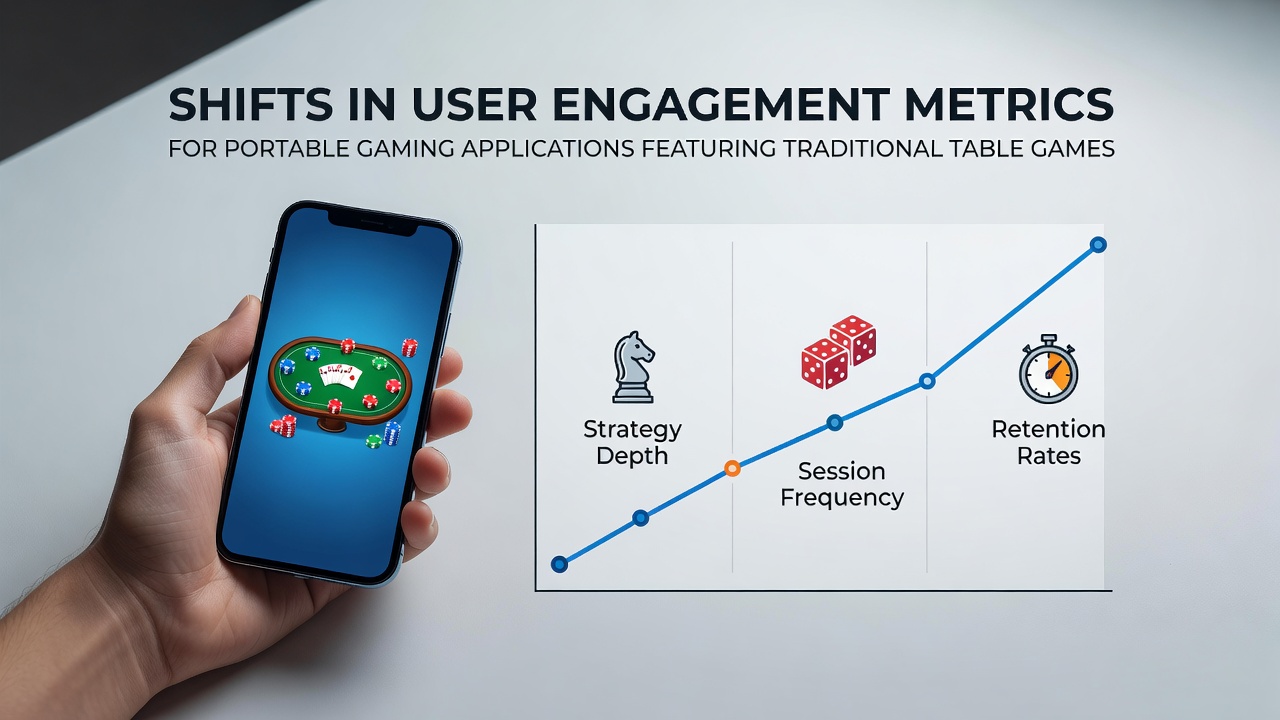
Portable gaming applications that feature traditional table games such as blackjack, roulette and poker have recorded measurable changes in engagement patterns over the past eighteen months, with session durations, return frequencies and interaction depth all showing distinct movements according to aggregated industry data.
Defining the Core Metrics Under Review
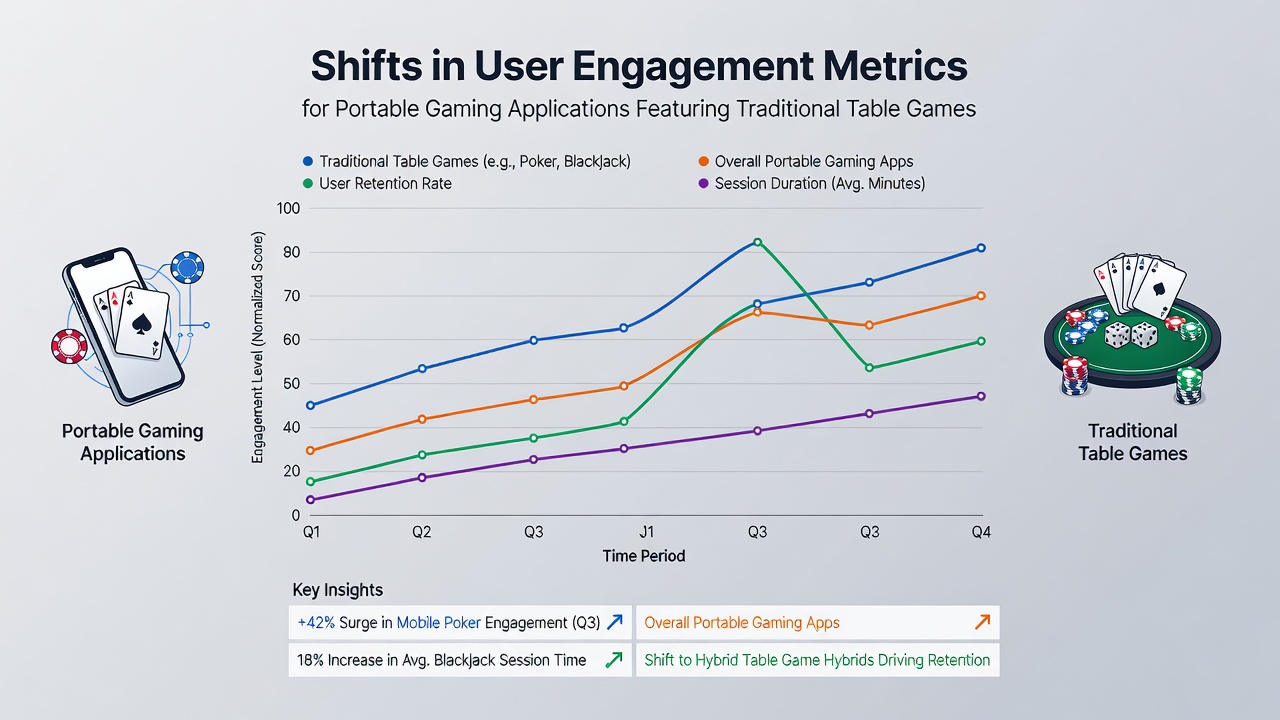
Engagement in this sector typically tracks daily active users, average session length, retention at seven and thirty days, and in-app actions such as bet adjustments or rule consultations; researchers tracking these variables note that mobile formats now account for the majority of table-game playtime across multiple jurisdictions. Data compiled through June 2026 indicates that average session length on portable devices has extended by roughly fourteen percent compared with the same period in 2024, while the number of discrete sessions per user per week has declined slightly, suggesting users consolidate activity into fewer but longer visits.
Regional Data Patterns Emerging in Mid-2026
North American operators report that users in regulated markets spend an average of twenty-two minutes per session on mobile table games, up from nineteen minutes recorded twelve months earlier, while similar applications in parts of Asia-Pacific show session lengths holding steady near eighteen minutes yet demonstrating higher repeat-log-in rates within twenty-four hours. Observers note that these differences align with varying regulatory frameworks and network infrastructure rather than any single design choice, and figures from the Nevada Gaming Control Board continue to provide one benchmark for tracking how mobile table-game traffic contributes to overall handle.
Technological and Interface Adjustments Driving Change
Application developers have introduced faster load sequences, improved touch-target sizing and real-time balance updates that reduce friction during play; these modifications coincide with shifts in how long users remain active before exiting. Studies from academic teams at institutions in Canada and Australia document that streamlined onboarding flows correlate with improved day-seven retention, although the precise contribution of each element varies by game type. Poker variants, for instance, register higher multi-table engagement on tablets than on phones, whereas roulette sessions show comparable depth across both form factors once the interface accommodates landscape orientation.
Cross-Platform Behavior and Loyalty Integration
Users frequently move between portable applications and desktop versions within the same ecosystem, and operators record that individuals who begin a session on a phone often complete larger bet sequences later on a tablet or laptop; this pattern appears in transaction logs reviewed by multiple platform providers. Loyalty point accrual and redemption mechanics have also evolved, with several systems now awarding incremental rewards based on consecutive mobile sessions rather than total wager volume alone, which in turn influences how frequently players return within a calendar week.
Regulatory Context and Reporting Requirements
Regulators in multiple jurisdictions require operators to submit engagement-related statistics alongside financial data, creating a growing body of comparable figures that analysts can examine for broader trends. Reports released through the first half of 2026 from bodies such as the Alcohol and Gaming Commission of Ontario illustrate how mobile table-game participation has outpaced certain land-based equivalents in frequency of play, although average stake sizes remain lower on portable devices. Similar documentation from the Singapore Casino Regulatory Authority tracks player time-on-device metrics that help authorities monitor responsible-gaming indicators without prescribing specific design interventions.
Demographic Variations Within the Metrics
Age cohorts display different engagement signatures: users aged twenty-five to thirty-four tend toward shorter, more frequent sessions concentrated in evening hours, whereas those aged forty-five and older register longer individual sessions spread across daytime periods. These distinctions emerge consistently in anonymized telemetry shared by operators with research partners, and they influence how new features such as quick-deposit options or simplified rule summaries are prioritized in update cycles.
Measurement Challenges and Standardization Efforts
Comparing engagement across applications remains complicated by differing definitions of an active session and by privacy frameworks that limit the granularity of shared data; industry working groups have begun drafting common reporting templates to address these inconsistencies. Until wider adoption occurs, individual operators continue to benchmark internally against their own historical figures, producing the localized shifts described in recent quarterly summaries.
Conclusion
Portable gaming applications centered on traditional table games continue to exhibit evolving engagement metrics shaped by interface refinements, regional regulatory environments and user movement across devices. The patterns documented through June 2026 supply operators and oversight bodies with concrete reference points for monitoring participation while maintaining compliance with existing reporting standards.