Shifting Dealer Rotation Patterns Across Multi-Studio Live Poker Networks and Their Effect on Variant Selection Metrics

Multi-studio live poker networks have expanded their operations through synchronized dealer schedules that span several physical locations, and these changes have begun to reshape how players select game variants during peak hours. Networks operating across time zones coordinate rotations so that dealers move between tables featuring Texas Hold'em, Pot Limit Omaha, and mixed game formats, while data tracking systems record the resulting shifts in player engagement. Observers note that these patterns create measurable differences in variant selection, particularly when dealers transition from high-volume cash games to lower-stakes tournament structures within the same hour.
Data from several networks indicates that rotation intervals shortened from 45 minutes to 30 minutes in early 2026, and this adjustment coincided with increased selections of Pot Limit Omaha tables during evening sessions in June 2026. The shorter cycles allow dealers to cover more tables without extended breaks, yet the change also influences which variants remain populated because players follow familiar dealers across formats. Research conducted by industry monitoring groups shows that networks employing staggered rotations report a 12 percent rise in mixed-game participation compared with fixed-location schedules.
Network Operations and Dealer Scheduling
Operators maintain separate studios in different regions to ensure continuous coverage, and they adjust rotation patterns based on real-time player volume metrics. When demand spikes for a particular variant, schedulers reassign dealers from slower tables to maintain flow, and this redistribution affects the metrics that track variant popularity. Those who monitor these systems report that cross-studio handoffs introduce brief pauses that prompt some players to switch variants rather than wait, while others remain loyal to specific dealer styles across multiple game types.
Live poker platforms integrate player data with dealer assignment logs, creating datasets that reveal correlations between rotation timing and game selection. In one documented case from a network spanning North America and Europe, analysts found that dealers rotating every 25 minutes during June 2026 produced higher retention rates for Omaha variants than longer intervals did. The same analysis showed that Hold'em tables experienced steadier traffic when rotations aligned with natural session endings around 90-minute marks.
Impact on Variant Selection Metrics
Selection metrics capture the percentage of active tables devoted to each variant, and rotation patterns influence these figures by altering table availability and dealer familiarity. Networks that implement predictive scheduling based on historical data see fewer empty tables during transitions, which in turn supports consistent player movement between variants. Figures from monitoring services reveal that when dealers specialize in two variants rather than one, players demonstrate greater willingness to follow them into secondary formats.
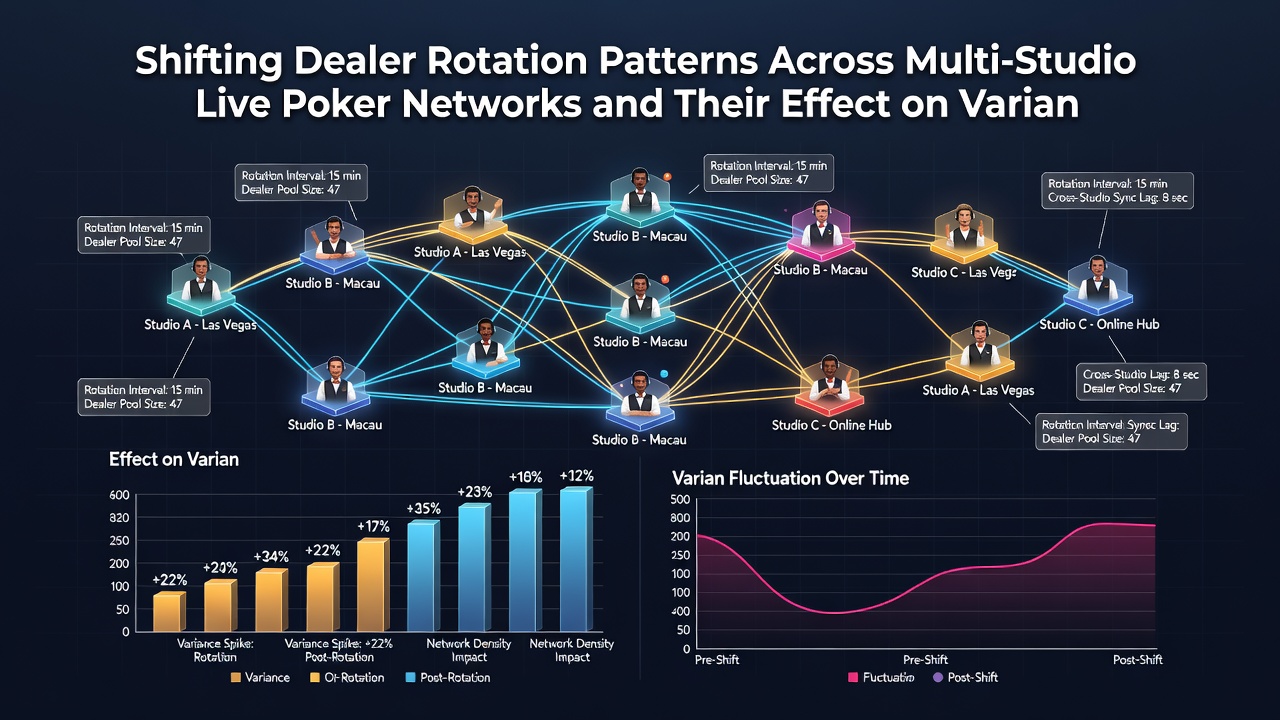
Studies from academic research centers examining digital gaming ecosystems indicate that rotation flexibility correlates with broader variant experimentation, especially among mid-stakes players. Those who track session logs across multiple studios observe that players exposed to frequent dealer changes sample new variants at higher rates than those encountering static dealer assignments. The effect appears most pronounced during overlapping peak periods when networks draw from combined player pools across regions.
Regional Variations in Rotation Practices
Networks based in different jurisdictions apply distinct approaches to dealer management because local regulations shape staffing requirements and break policies. North American operations often favor shorter rotations to accommodate higher table counts, whereas European platforms extend intervals slightly to align with labor standards. According to data published by the Nevada Gaming Control Board, multi-studio operators licensed in the state recorded a measurable uptick in mixed-variant sessions following the adoption of dynamic rotation software in spring 2026.
Similar patterns emerge in Asia-Pacific markets where networks balance dealer availability across large studio complexes. Reports compiled by the Australian Gambling Research Centre document how staggered rotations in cross-border networks affect player choices, noting that shorter cycles increase exposure to less common variants without reducing overall table occupancy.
Conclusion
Dealer rotation adjustments continue to modify the distribution of play across poker variants within multi-studio networks, and the resulting metrics provide operators with clearer signals for scheduling refinements. As networks expand their studio footprints and refine assignment algorithms, the connection between rotation timing and variant selection remains a central factor in operational planning. Continued collection of session data will allow further examination of these dynamics across evolving market conditions.